
.jpg)

Ancona
Ancona is the city that every ferry passenger sees from the car deck and almost nobody gets off the ship to visit. It has a Roman triumphal arch on the water, a Romanesque cathedral on a headland, and the best…
The Marche is the region that nobody goes to. It has a UNESCO city, fifteen Blue Flag beaches, the largest underground cave system in Europe, a national park the size of Luxembourg, and the second-oldest university in Italy. It produced Raphael, Rossini and Leopardi. Its sparkling white — Verdicchio — is the most-exported Italian white wine in the world. And the foreigners go past it, on the A14, on their way from Venice to the south, at 130 kilometres an hour.
I do not know why. Some of it is pronunciation — most English-speakers say march when it’s mar-keh, plural (the old site always wrote it as “The Marches”, which is closer). Some of it is Marche’s own fault: the region has never mounted an international marketing campaign, its cities are scattered, and its capital, Ancona, is an industrial port that took a flattening in the war. But the bulk of it is sheer luck: Tuscany and Umbria are next door, they got to the branding party first, and the guidebooks pile up on what’s already in them. The Marche just quietly keeps making vincisgrassi.
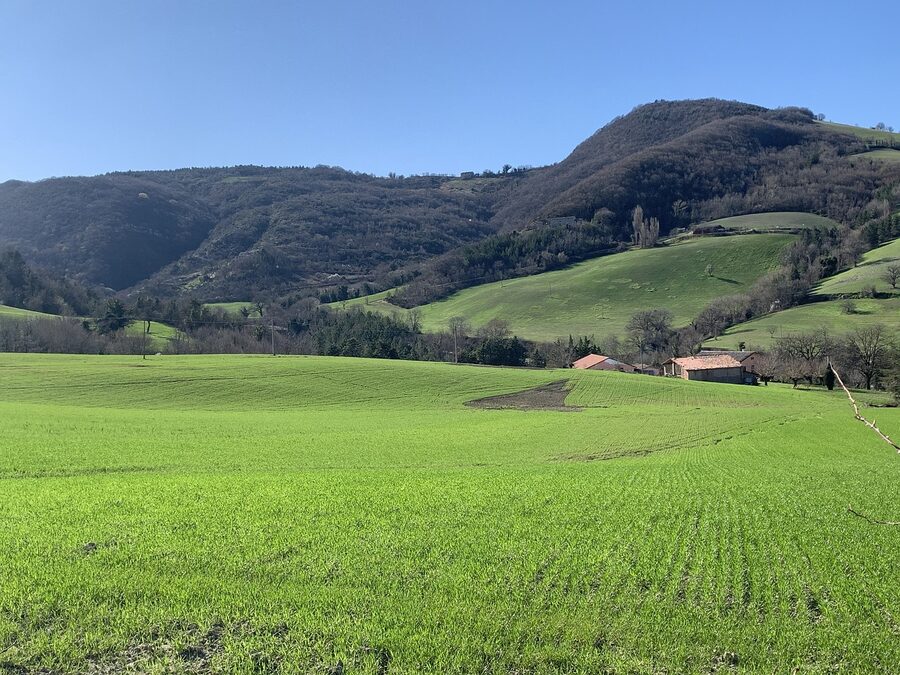
The region sits on the Adriatic side of central Italy, wedged between Emilia-Romagna to the north, Umbria and Lazio inland, Abruzzo to the south. Geographically it’s straightforward: a long coastal strip of beaches, an immediate band of hills, and then the Apennines rising sharply to the west. About 1.5 million people live here, roughly the population of Milan, scattered across 1,800 hill towns and five provincial capitals.
The five provinces are Ancona (the regional capital), Pesaro e Urbino in the north, Macerata in the centre, Fermo on the southern coast, and Ascoli Piceno at the bottom. Each is a world of its own. North Marche speaks closer to Romagnolo; south Marche speaks closer to Abruzzese. The dialects don’t really understand each other. This is normal in Italy.
Historically it was Roman Picenum — named for the Piceni, the pre-Roman tribe whose emblem was a woodpecker (picus). The Romans absorbed it, the Lombards took it, the Papal States held it for a thousand years, and it became part of unified Italy in 1860. The name Marche — plural — comes from the Germanic medieval Marken, meaning borderlands. It was always the frontier between somewhere else and somewhere else. Which is part of the charm.
If you’re planning a trip, this is the shortest honest summary I can give you for each province:
Urbino and Pesaro (Pesaro e Urbino province) — the Renaissance heart. Urbino is the UNESCO jewel, a hilltop ducal capital where Raphael was born. Pesaro is Rossini’s birthplace, a working seaside town with a strong opera festival and one of the best beaches north of Rimini. Between them: Fano, Gradara Castle, Urbania, Fossombrone. More on Urbino in its own guide.
Ancona — the port. An ancient Greek foundation (387 BC), Italy’s main Adriatic ferry hub, and the cathedral of San Ciriaco looks out over the harbour. The city centre was heavily bombed in the war and rebuilt quickly; parts of it are industrial. Come for the Roman Arch of Trajan, the underground archaeological museum, and a short list of survivors from the medieval period. See the Ancona guide.
Macerata — the midlands. Walled medieval towns, an opera season held in a 19th-century open-air arena called the Sferisterio, Recanati (birthplace of the poet Giacomo Leopardi), Tolentino with its Fiastra Abbey, Camerino with its university and its cathedral. Less touristed than Pesaro e Urbino, which is why it’s rewarding.
Fermo — the newest province, split off from Ascoli Piceno in 2004. The capital, also called Fermo, has a stunning Roman cistern complex beneath the main square that predates Christianity and is one of the most impressive underground sights in Italy outside of Rome. The coast is a long string of beach towns, the most interesting of which is Porto San Giorgio.
Ascoli Piceno — the travertine city. The southernmost province and, in my opinion, the most underrated. Ascoli itself is built almost entirely out of a pale creamy limestone, quarried locally, which makes the entire old town glow at sunset. Olive ascolane — fried green olives stuffed with meat — were invented here. The coast has Grottammare (a proper pretty town) and the south-facing beaches of San Benedetto del Tronto.
There is one Marche airport — Ancona-Falconara (AOI) — which runs a handful of summer charters to northern Europe and a limited year-round schedule to Italian hubs. It’s small. For most international arrivals, the practical airports are Bologna (180 km, 2 hours by train or car to Ancona), Rimini (25-75 km depending on where in Marche you’re headed) or Rome Fiumicino (230 km, 3 hours). If you’re flying to Italy from outside Europe, Rome is usually cheapest; from Europe, Bologna.
The region is long and narrow. From Pesaro to San Benedetto del Tronto is 175 kilometres along the coast. The A14 coastal motorway runs the whole length, shadowed by a regional train line (Milano-Lecce), which stops at every coastal town. Inland, you’re on secondary roads and buses, and you’ll want a car. The drive from Ancona to Urbino takes about an hour and a half through the hills, and it’s one of the most pleasant drives in Italy — empty roads, stone villages on every ridge, no tour buses.
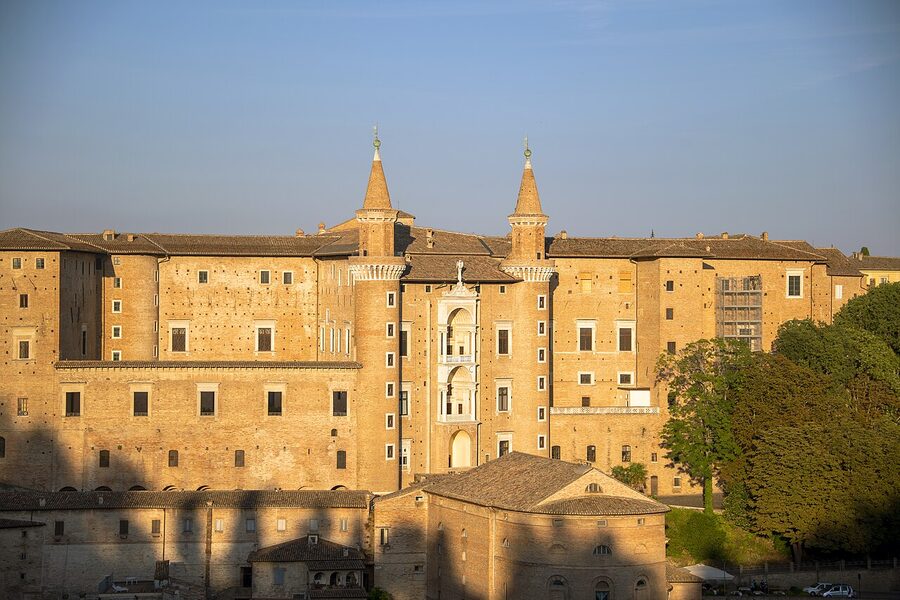
Urbino is the region’s showpiece, and it has no business being as good as it is. A small ridge-top town, population fourteen thousand, which in the second half of the fifteenth century was the most brilliant princely court in Italy. Duke Federico da Montefeltro — a professional soldier, a humanist scholar and a patron of Piero della Francesca — built a palace that is still on the UNESCO list, commissioned the Flagellation of Christ and the Madonna of Senigallia, and employed half the best artists in the peninsula. Twenty-five years later his patronage produced Raphael, who was born there in 1483. The old town is one of the best-preserved Renaissance ensembles in Italy, all brick and Istrian stone, walkable in an afternoon. I’ve written a full guide — see the Urbino article.
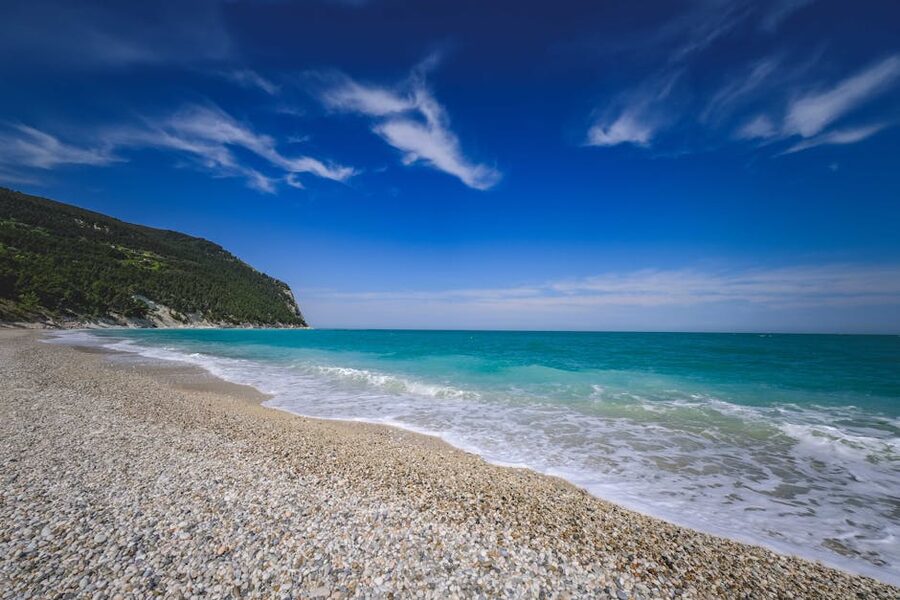
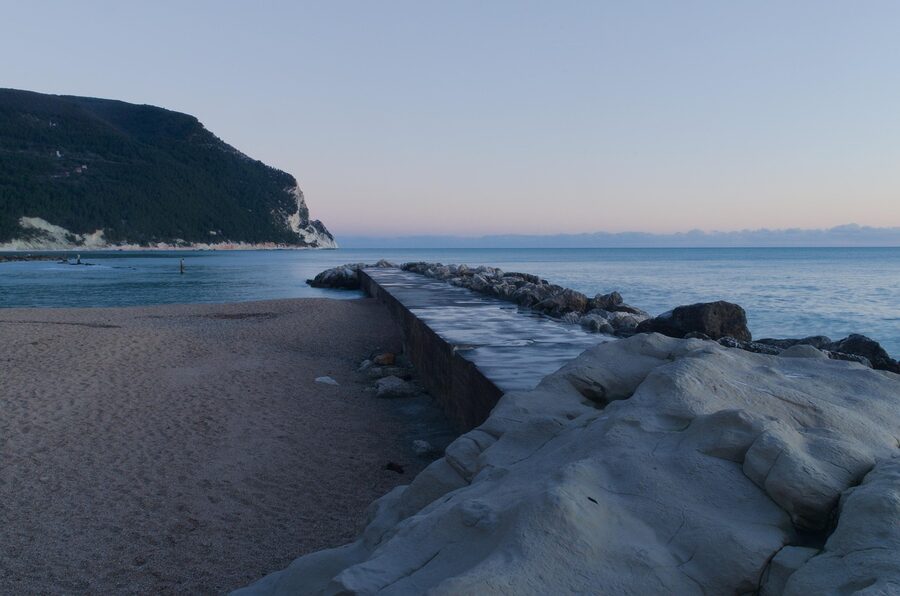
The Marche coast, for the most part, is long flat Adriatic sand — lido-style, row after row of umbrella rentals, family-friendly, well-managed, not especially beautiful. The exception is a fifteen-kilometre stretch just south of Ancona called the Riviera del Conero, where a 572-metre limestone headland (Monte Conero) falls into the sea and breaks the coast into coves. This is where Marchigiani go on holiday. The main towns are Sirolo and Numana; the best-known beaches are Spiaggia San Michele, Spiaggia delle Due Sorelle (access only by boat from Numana), and Portonovo on the north side with its little 11th-century church right on the pebbles. Spring and September are the sensible times to come — August is packed, and the boat launches for Due Sorelle sell out by mid-morning.
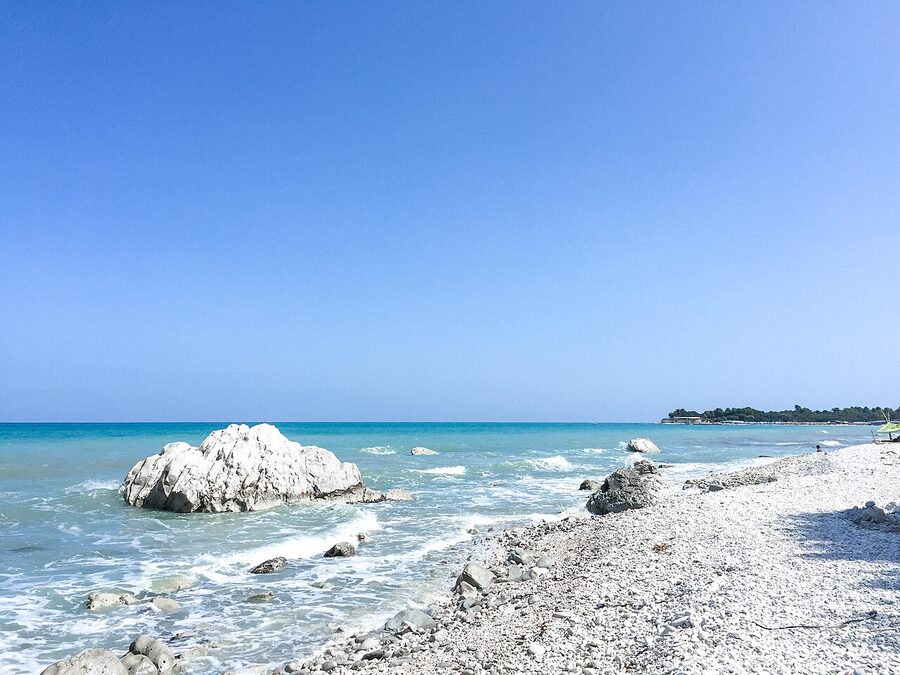
Local dish to eat here: moscioli — wild mussels that grow on the Conero rocks, Slow Food presidium, smaller and sweeter than farmed. Any trattoria in Portonovo will do them. September is peak season.
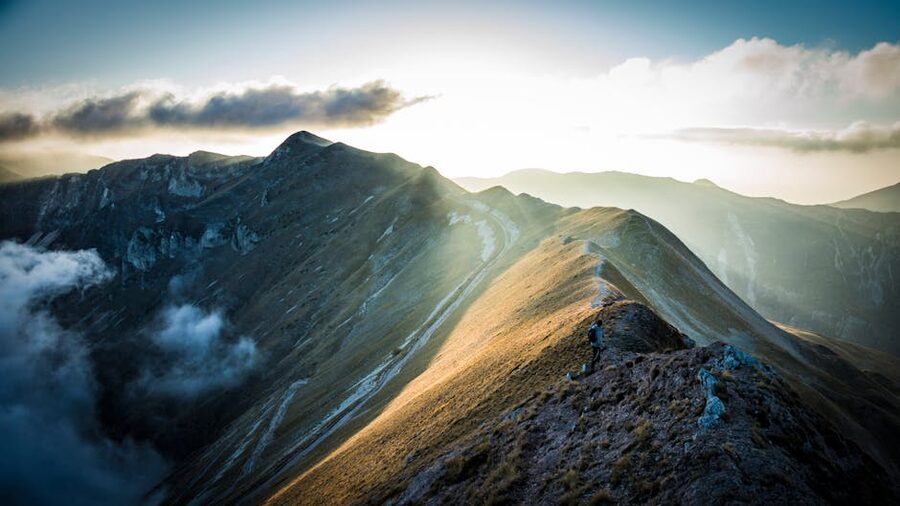
The Parco Nazionale dei Monti Sibillini covers about 700 square kilometres of the southwestern Marche (it spills into Umbria). Monte Vettore, at 2,476 metres, is the highest peak. The range takes its name from the Sibilla Appenninica, a legendary oracle whose cave is supposed to be somewhere on Monte Sibilla — medieval pilgrims came looking for her, and the park still has a decent collection of dark-age legends about witches, devils and priests meeting in the high pastures. More immediately, it has the Piano Grande, a three-kilometre-wide highland plain famous for its lentil and wildflower bloom in late May and early June.
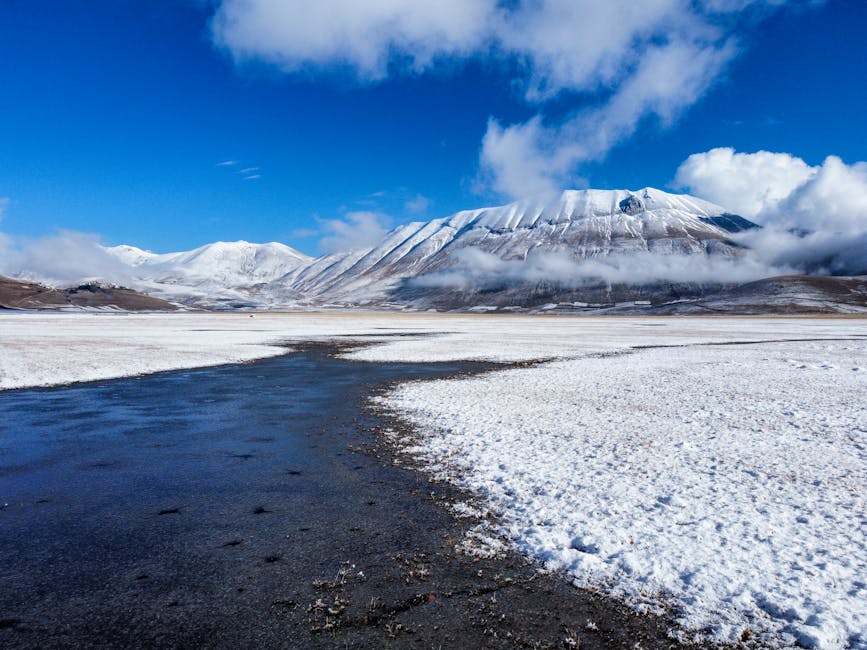
The 2016 earthquake hit the Sibillini hard — the villages of Castelluccio, Visso, Ussita, Pieve Torina were all badly damaged. Some have been partially rebuilt; some are still tent encampments and containers. Go, but go with awareness that recovery is still in progress and spend money locally where you can.
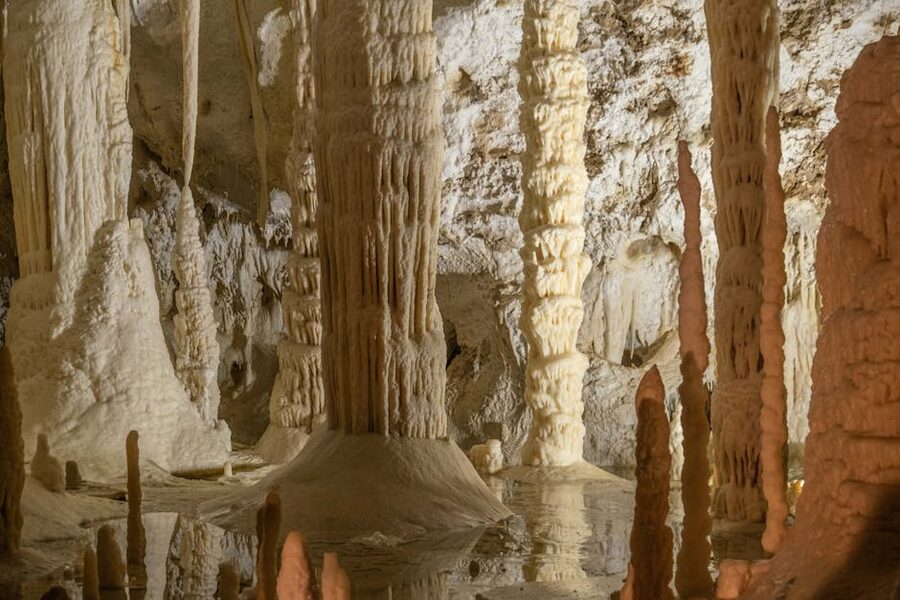
Halfway up the Esino valley, roughly between Ancona and Fabriano, is the entrance to the Grotte di Frasassi — one of the largest cave systems in Europe. The main chamber, the Grotta Grande del Vento, was discovered in 1971 by a group of Ancona cavers and is 240 metres long, 180 wide and 200 high. It’s big enough to fit Milan Cathedral inside. The standard tour is 1 hour 15 minutes, €18 adults, on a paved path with lighting. Book online in summer; the midday slots sell out. Bring a jacket — 14°C and 100% humidity year-round.
Outside the caves, in the same gorge, there are two small medieval sanctuaries worth a look: the Tempietto del Valadier (a neoclassical chapel tucked inside a cave mouth, commissioned in 1828 by Pope Leo XII) and the Santa Maria Infra Saxa, a tiny hermit’s chapel built into a rock overhang.
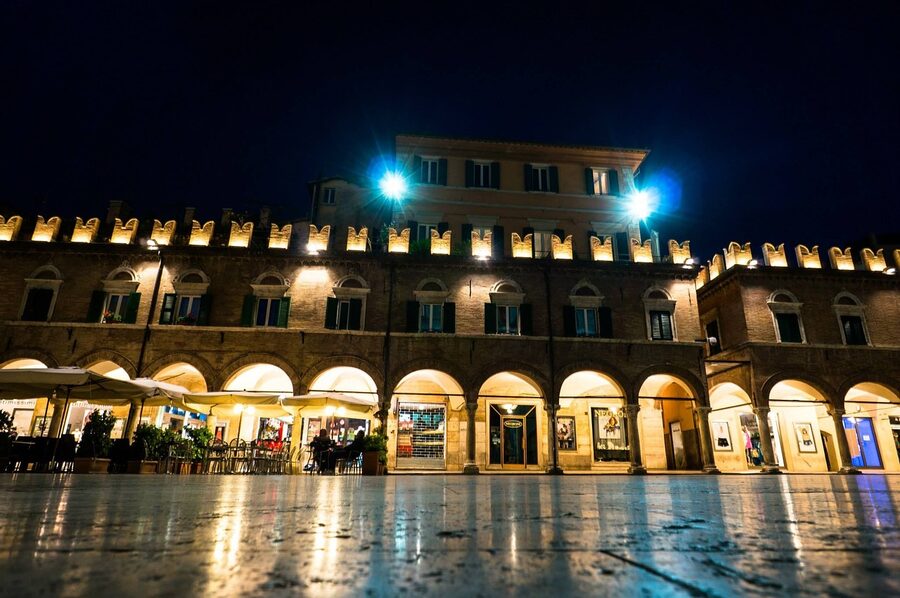
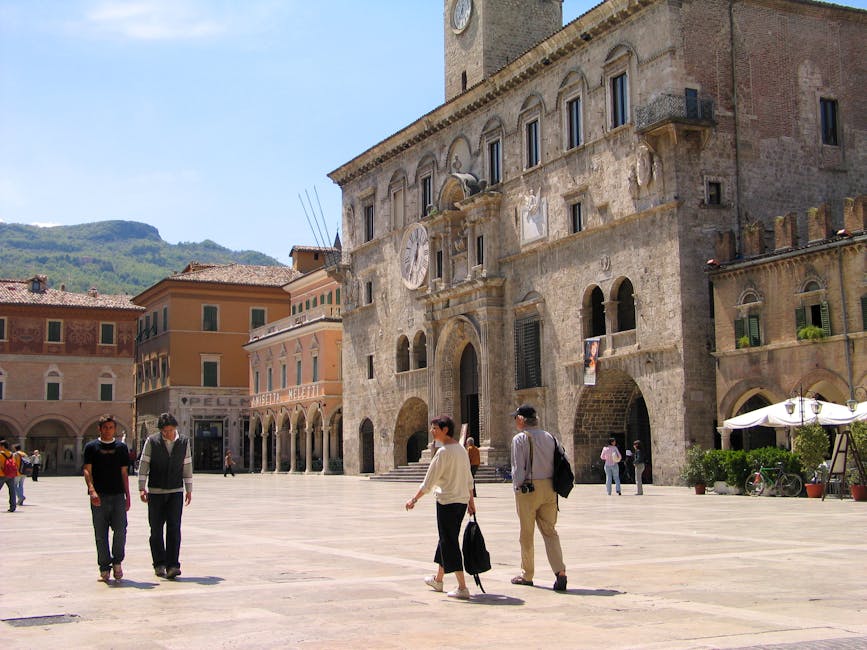
The city of Ascoli Piceno — the provincial capital — is the single most underrated destination in Marche. Everything in the old town is built from travertine, the same cream-coloured stone that Rome’s Colosseum is made from, quarried a few kilometres away. The central square, Piazza del Popolo, is one of the finest in Italy: arcaded on three sides, bookended by the Palazzo dei Capitani and the church of San Francesco, and fronted by Caffè Meletti — the oldest café in the city, famous for its anisetta, a sweet aniseed spirit that you drink in a small glass, neat, with three coffee beans floating in it (symbolising health, happiness and prosperity).
The other things to do: climb the Torre dei Gualtieri (medieval merchant tower), visit the tiny Pinacoteca Civica (has a superb small collection — a Titian, a Crivelli polyptych, a Van Dyck), walk the fortified Porta Maggiore, and eat fried stuffed olives everywhere.
Marche food is Adriatic food with an Apennine backbone. The coast eats fish; the interior eats meat; both eat pasta and stuffed things. Five things to try and one to drink:
Olive ascolane all’ascolana — fried stuffed olives. Local Tenera Ascolana olives, pitted, stuffed with a mix of beef, pork and chicken, breaded, deep-fried. They’re sold in paper cones by street vendors in Ascoli for about €4. The single best snack in Italy.
Vincisgrassi — a layered pasta, not quite a lasagna, with a rich sauce involving chicken livers, sweetbreads, porcini and meat ragu, béchamel between layers, usually served at festivals and Sunday lunches. Origin disputed: some say it was invented for an Austrian general (Windisch Graetz) during the Napoleonic wars; the local historians say the recipe predates that by fifty years. Either way, it’s baroque, it’s Marchigiano, and if a trattoria offers it, order it.
Brodetto — Adriatic fish stew. Every coastal town has its own version; the main distinction is San Benedetto del Tronto style (tomato, green chilli, thirteen varieties of fish) vs Fano style (vinegar, less tomato, nine fish). Both are good. The fifth or sixth kind of fish in every brodetto is always mazzancolle (local red prawns).
Ciauscolo — a soft, spreadable, garlicky salami from the hills around Macerata, PGI-protected. Eat it on crescia. Very distinctive. Not like anything else.
Crescia — flatbread. A cousin of piadina, crescia has a bit more structure — pepper and lard in the dough, slightly thicker. The Urbino crescia sfogliata is laminated like puff pastry and cooked on a testa, a flat terracotta disc. Best eaten within three minutes of coming off the plate.
Verdicchio — the white wine that built the region’s export economy. Two DOCGs: Verdicchio dei Castelli di Jesi (lighter, more mineral, from the hills inland from Ancona) and Verdicchio di Matelica (fuller, more structured, from a single upland valley in Macerata province). The top producers — Bucci, Umani Ronchi, Sartarelli, La Staffa, Aurora, Pievalta — bottle versions that age for decades. A Verdicchio Riserva with a ten-year cellar behind it will show honey, almond, saffron, petrol — a serious wine for serious prices (€25-40 for the best bottles). The entry-level “fish wine” — Verdicchio Classico — starts at €8 and is the workhorse for brodetto.
Reds: Rosso Conero (Montepulciano d’Abruzzo grape, grown around Mt Conero — dark, spicy, good with grilled meat), Rosso Piceno (Sangiovese-Montepulciano blend, lighter), and the oddity Lacrima di Morro d’Alba (low-tannin, extremely floral, drinks like a light Gamay — one of the few Italian wines that does well slightly chilled in summer).
May-June and September are my recommended windows across most of the region. May has the Piano Grande wildflower bloom and the early beaches, June has the Sagra delle Ciliegie (cherry festival) at Cantiano and the Rossini Opera Festival is about to start in Pesaro, July has the main opera festivals at Pesaro and Macerata and the full beach season, August is packed and hot (avoid unless you like crowds), September has warm sea, good wine festivals (the Verdicchio in Festa in Jesi), and near-empty Frasassi and Urbino.
Winter works for a different reason. The Sibillini get real snow and real skiing (Frontignano, Sarnano, Bolognola). Ascoli Piceno has a proper Christmas market. The piadinerie and brodetterie are mostly open year-round. If you don’t mind the occasional fog and the shorter days, January in Urbino is arguably more atmospheric than July.
If you have three days: Ancona-Conero-Frasassi-Urbino, with two nights in Urbino and one in Sirolo. If you have five: add Ascoli Piceno in the south and either Sibillini or Macerata inland. If you have a week: do all of the above, plus Pesaro, the Gradara castle, and a day or two walking in the Monti Sibillini.
The Marche doesn’t do itself any favours with marketing. It doesn’t need to. Come with a week and a car and you’ll go home planning the return trip. See the specific city guides for more — starting with Urbino and Ancona — and feel free to treat this hub as an index rather than a summary. Everything here is worth its own day.
Ancona is the city that every ferry passenger sees from the car deck and almost nobody gets off the ship to visit. It has a Roman triumphal arch on the water, a Romanesque cathedral on a headland, and the best…
Urbino is a town of fourteen thousand people on a pair of hills in the central Marche. It has a university, a small theatre, a modest cathedral, a good Saturday market, and one of the dozen most important art galleries…